
Why You Are Angry: How Strict Parenting Breaks Children and Creates Broken Adults

We often carry the ghosts of our childhood into the boardrooms and bedrooms of our adult lives.
Part I: The Anatomy of a Broken Adult
I want you to meet Marcus. You have likely met him before, perhaps in your office, perhaps in your circle of acquaintances, or perhaps, painfully, you see him when you look in the mirror.
At thirty-two years old, Marcus is a paradox. To the casual observer, he seems confident, perhaps even arrogant. But if you scratch the surface, you find a volatile, crumbling infrastructure. He is currently unemployed—a recurring theme in his life. He wasn't fired for a lack of skill; he is brilliant. He was fired for a lack of emotional regulation. When his manager offered constructive criticism, Marcus didn't hear advice; he heard an attack. He exploded, burning a bridge he needed to cross.
His personal life is equally scorched. He treats his girlfriend not as a partner, but as a subordinate. He tracks her location, demands constant reassurance, and flies into a jealous rage if she doesn't reply to a text within five minutes. Yet, he offers no vulnerability in return. He is a fortress with the drawbridge permanently up.
He has no true friends, only an audience he performs for. He is aggressive in traffic, rude to service workers, and incapable of the phrase "I am sorry." To Marcus, an apology is a submission, and he swore a long time ago he would never submit again.
It is easy to label Marcus a "narcissist" or a "toxic person" and walk away. But psychology tells us that behavior is a language. Marcus is screaming in a language he learned three decades ago. To understand the man, we must return to the boy.
Part II: The Battlefield of Childhood Paradigms
Parenting is the programming language of the human mind. While most parents do their best, there is a specific subset of "strictness" that crosses the line into psychological destruction. We must distinguish between Structure and Suffocation.
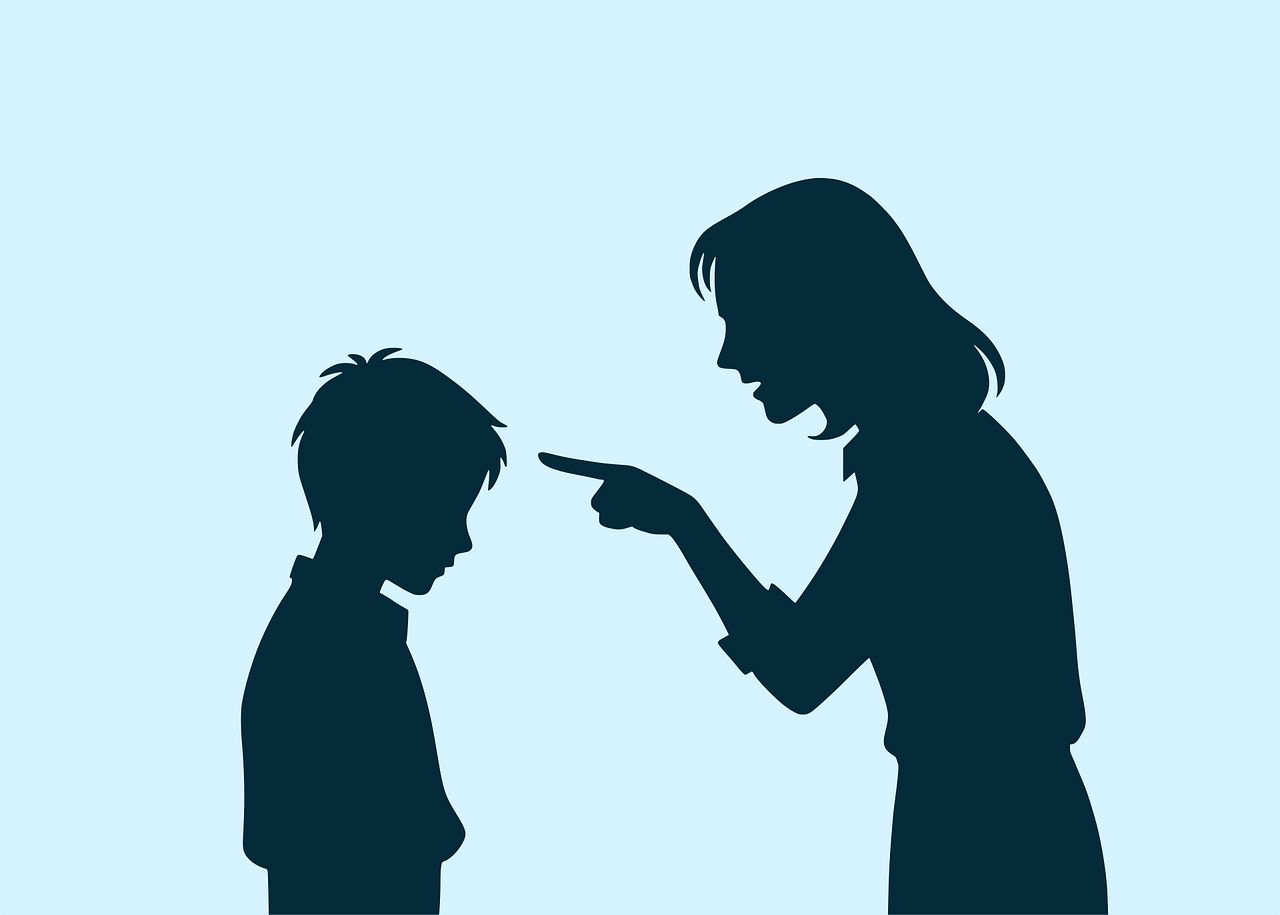
When fear is the primary tool of parenting, trust is the first casualty.
The Traditional (Authoritarian) Trap
In the environment Marcus grew up in, the philosophy was simple: Children are property.
This paradigm, often passed down through generations of unhealed trauma, views obedience as the highest virtue. It is not enough for the child to do what they are told; they must agree with what they are told. In this household, emotions are inconveniences. Crying is weakness. Questioning is rebellion.
The parents here are not necessarily "evil" in their own minds. They often believe they are preparing the child for a harsh world. They think, "If I am hard on him, the world won't be able to break him." But they are wrong. By being the hammer, they ensure their child enters the world already broken.
The Modern (Conscious) Alternative
Contrast this with the modern, authoritative approach. Here, the goal is not compliance, but competence. The parent acts as a guide, not a warden. They understand that a child who is listened to learns to listen to others. They understand that a child who is respected learns self-respect.
Part III: The Toolkit of Control
How exactly does a parent break a child's spirit? It is rarely one big event; it is death by a thousand cuts. Here are the 6 specific weapons found in the toxic parenting arsenal:
- 1. The God Complex (Infallibility): The parent is never wrong. Even when facts prove them wrong, they twist reality. This gaslighting teaches the child to doubt their own sanity and reality.
- 2. Emotional Guilt Trapping: "I sacrificed my life for you, and this is how you repay me?" The child is made to feel that their existence is a burden. They learn that they are responsible for their parents' happiness.
- 3. The Destruction of Privacy: Reading diaries, removing bedroom doors, monitoring calls. This teaches the child a terrifying lesson: "You have no self. You have no boundaries. You belong to me."
- 4. The Comparison Game: "Why can't you be like your cousin?" This instills a deep-seated belief that they are inherently inadequate and that love is a competition.
- 5. The Pressure Cooker (Forced Academics): Banning hobbies and forcing career paths. This kills intrinsic motivation. Marcus never learned to work hard for himself; he only worked hard to avoid punishment.
- 6. The Spectrum of Abuse: Physical blows or verbal humiliation ("You are stupid," "You are worthless"). This normalizes violence as a conflict resolution tool.
Part IV: The Neuroscience of Fear
This isn't just "feelings"; it is biology. When a child lives in a hostile environment, their brain develops differently.
- The Amygdala Hijack: The amygdala is the brain's threat detection center. In abused children, this becomes enlarged and hyper-active. They are constantly in "Fight or Flight" mode. Even as adults, minor stressors (a critique at work, a messy house) trigger a massive survival response. This is why Marcus explodes over small things.
- The Prefrontal Cortex Shutdown: This is the part of the brain responsible for logic, empathy, and impulse control. Chronic stress hormones (cortisol) damage connections in this area. The result? An adult who literally struggles to empathize with others or control their anger.
Part V: Connecting the Dots (The Roadmap of Trauma)
This is where we must look closely. We need to draw the direct lines between the abuse of the past and the dysfunction of the present. The behaviors of adult Marcus are not random; they are calculated survival mechanisms that have outlived their usefulness.
1. The Abuse: Privacy Invasion → The Result: Relationship Paranoia
Because Marcus had his diary read and his door removed as a child, he never developed a "secure base." He learned that intimacy means invasion.
In adulthood: He demands his girlfriend’s passwords not because he is evil, but because his brain equates "unknown" with "danger." He is preemptively invading her privacy to prevent her from invading his. It is a twisted form of self-defense.
2. The Abuse: The "God Complex" Parent → The Result: The Unemployable Narcissist
Marcus grew up under a tyrant where he had zero power. He felt helpless for 18 years.
In adulthood: He has made a subconscious vow: "No one will ever dominate me again." When a boss gives him an order, it triggers that childhood helplessness. He rebels against the boss as if he is rebelling against his father. He destroys his own career to prove he is "free."
3. The Abuse: Emotional Suppression → The Result: The Volcano
"Stop crying or I'll give you something to cry about." Marcus stuffed his anger down for decades.
In adulthood: That anger didn't disappear; it fermented. Now, it is a volcano. When he drops a glass or hits traffic, the volcano erupts. He isn't mad at the traffic; he is releasing 20 years of suppressed rage.
Part VI: The Ripple Effect (Work, Love & Society)
The damage extends far beyond Marcus's own mind. It bleeds into every handshake, every office meeting, and every embrace.

The child who is not embraced by the village will burn it down to feel its warmth.
1. Romantic Entanglements: The Anxious-Avoidant Trap
This is where the deepest wounds are exposed. Marcus likely has an Avoidant Attachment Style. He craves love, but when he gets it, he feels suffocated. When his partner gets too close, he pushes them away (harsh words, coldness). But when they leave, he panics.
He recreates the dynamic he had with his parents: a relationship defined by anxiety, control, and walking on eggshells. He is trying to fix his childhood by re-living it, hoping for a different ending that never comes.
2. The Office Effect: Toxic Managers & Bad Employees
Marcus brings his trauma to work. He views every boss as his father—someone to be resisted. If he becomes a manager himself, he becomes the Tyrant. He micromanages his team because he has "Trust Issues." He hoards information. He cannot praise his employees because he was never praised.
The Result: High turnover, low morale, and a toxic culture. Companies lose millions annually because of "Marcuses" who cannot lead with empathy.
3. The Friend Circle: The Performer vs. The Bully
In social circles, the trauma survivor usually adopts a mask. Marcus takes the route of the Intellectual Bully. He needs to be the smartest person in the room to feel safe. He belittles his friends' opinions to elevate his own status.
Alternatively, some survivors become the "Funny One." They use self-deprecating humor as a shield, inviting people to laugh at them before they can be laughed at. In both cases, true connection is impossible because the "Real Self" is hiding behind a performance.
4. The Societal Cost: Crime and Chaos
We cannot ignore the link between childhood trauma and societal stability. Children raised with violence solve problems with violence. The aggression we see on our roads, in domestic disputes, and in public spaces often stems from the unhealed wounds of the nursery. Raising kind children is the most effective crime prevention strategy we have.
Part VII: The Path to Redemption (Breaking the Cycle)
Is Marcus doomed? Is he destined to be alone, bitter, and eventually, a toxic father himself? No. But the path out of the woods is difficult.

Growth is possible, even in the harshest conditions.
1. Reparenting the Inner Child
Marcus must learn to treat himself the way he wishes his parents had treated him. This means self-compassion. When he makes a mistake, instead of the internal voice saying "You idiot," he must learn to say, "It's okay, mistakes happen." He must become his own good parent.
2. Setting Boundaries with the Source
This is often the hardest step. Marcus may need to distance himself from his toxic parents. You cannot heal in the same environment that made you sick. This might mean "Low Contact" or simply establishing firm boundaries: "Dad, if you criticize my career again, I will hang up the phone."
3. Embracing Authoritative Values
For society to heal, we must collectively embrace Authoritative Parenting. We must raise children who are loved unconditionally but guided firmly. We must teach ethics, not just obedience. We must raise humans who are kind because they feel safe, not polite because they are terrified.
A Personal Note
Honestly, I think that people sometimes miss the very small details in life which then develop like a volcano inside them, exploding at times when you least expect it.
I have grown up in such an environment myself. I know the silence that screams louder than words. I know the weight of expectations that feel like physical chains. But I decided to break the cycle of this hatred and abusive family environment for myself.
I am not the best person at times—I still carry those scars, and the ghost of that little boy still gets scared sometimes—but I always try to be the person I wish others to be. If this message reaches even a few people's hearts and minds, then I will think that my objective of making this blog page has been successful.
This is not just about reducing crime or workplace toxicity; it is about saving the human spirit. It is about ensuring the next generation doesn't have to spend their adulthood recovering from their childhood.
Be Kind.
Xoxo.

Comments
Post a Comment